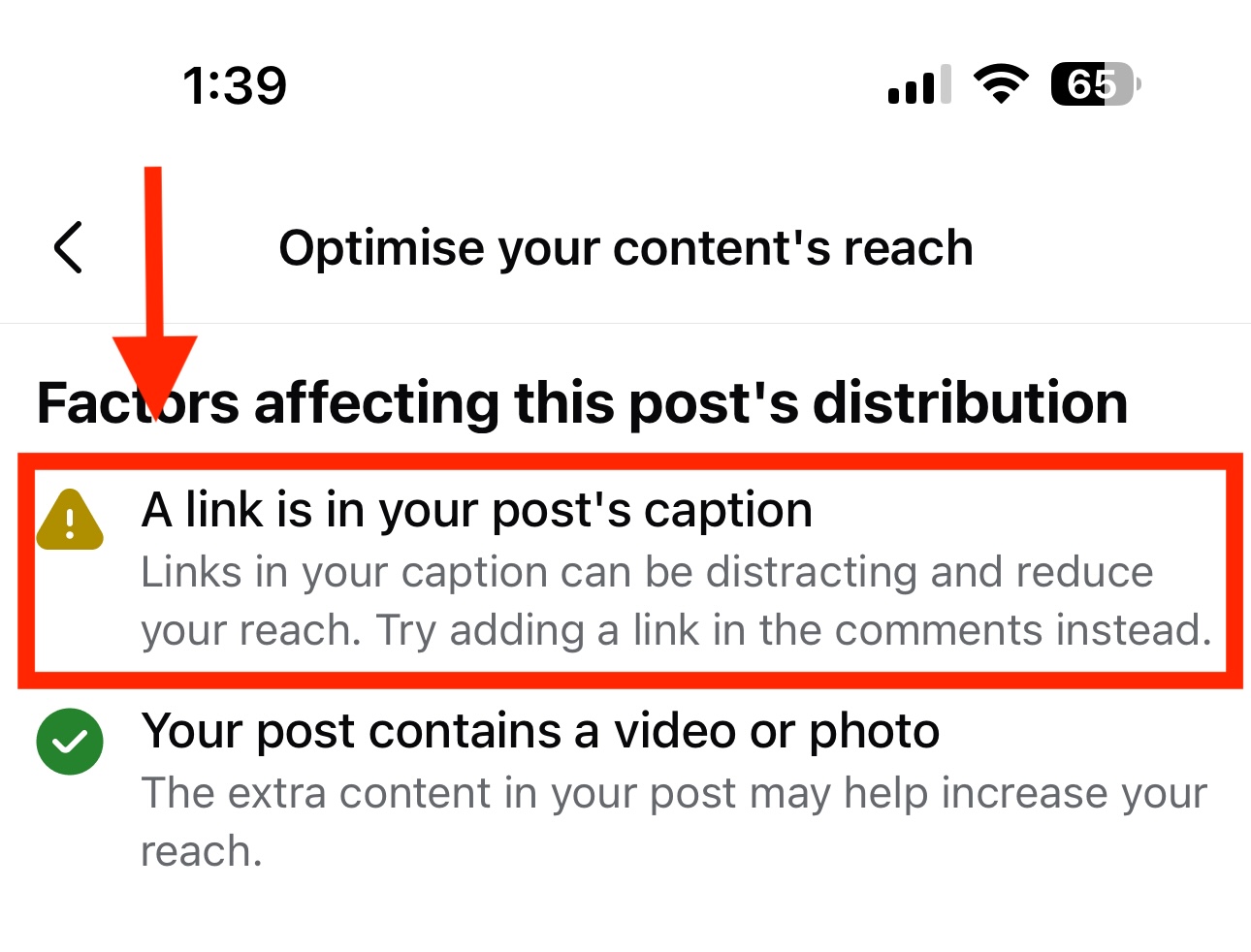
I bet you’ve been adding links directly into your social media post captions, hoping your audience will click through to your website or product page. It seems logical-but it’s not an effective strategy anymore.
If you check your Facebook post’s “See Insights and Ads” (on mobile), you’ll find a “Content Quality” section. One thing is clear: Meta (Facebook) deprioritizes posts with links in captions.
If you follow top publishers, news outlets, or big brands, you’ll notice they’ve stopped including links in captions. Instead, they post an image and drop the link in the first comment -sometimes even using multiple comments for multiple links.
TL;DR: Stop putting links in captions. It hurts your reach-confirmed.
1. Social Media Schedulers Can’t Always Help
Most social media schedulers-both native and third-party-don’t support auto-posting with a comment immediately after publishing (where the link should go). Some advanced tools allow it, but they usually come at a cost.
The screenshot I referred to is from Facebook, but the same applies to LinkedIn and X. Instagram doesn’t support clickable links in captions anyway, so this doesn’t apply there.
A low-effort workaround is to screenshot the top section of your website or page and post that image instead. Then, drop the link in the first comment. Bonus points if your image is in 3:4 or 4:5 vertical format for better visibility.
If your current scheduler allows editing, start removing the links from upcoming posts. For future scheduling, avoid placing links in the caption whenever possible.
2. Embrace Zero-Click Marketing
If you haven’t heard of zero-click marketing , now’s the time to learn.
Platforms want users to stay on their app. That’s how they serve more ads and gather more data.
Take Google’s new AI Overview -it offers near-perfect answers without needing to click anything. Previously, SEO experts fought for Structured Data placement. Now, it’s about surfacing in AI summaries.
Social media is the same. Platforms value engagement-likes, shares, saves, comments-not outbound clicks. That’s the “secret sauce” for reach.
A better approach: create teaser videos or summary images, then direct users to the first comment for more info or external links.
3. Learn from News Publishers
Observe how top publishers format their content: what image size they use, how they design thumbnails, and where they place key visual elements.
Notice the shift from square to vertical formats. These changes are data-driven-and you can learn a lot just by following their lead.
You’ll see that major media brands optimize differently for each platform. That’s intentional.
Also, look into how they use Stories -many post summaries there and include a link. It’s a subtle but effective way to drive traffic without hurting post reach.
4. Social Media Is Evolving (So Are Users)
User behavior changes fast-and social media platforms evolve with it. Strategies that worked a year ago may be outdated today.
Audiences are shifting, and so are their preferences. Short-form videos now dominate attention. The days of photo albums and long captions are fading.
Let’s be honest: social media feels increasingly commercial. Many users are posting less personal content and consuming more passive media.
Ask yourself: When was the last time you posted something truly personal?
“Attention is the new oil.”
At the time of writing, video is king . But user behavior is also shifting-from Google to AI tools like ChatGPT, Gemini, and Copilot. That’s a big leap in the buying journey.
Gen Z and Gen Alpha will reshape the digital landscape once they become active consumers. Their platforms, search behaviors, and content expectations will differ.
Will Facebook fade as older users leave? Maybe. But your digital footprint matters-regardless of platform.
AI models are being trained on content from everywhere. If you’re not visible, you’re not findable.
Final Thoughts
If you’re a professional digital marketer, adapting to changes, testing new formats, and learning emerging best practices should be second nature.
If you’re not paying attention, falling behind is inevitable.
Stay curious. Test smarter. And please-stop putting links in your captions.